
Answering the call means outpacing and out-innovating threats today and tomorrow
Boeing is developing, modernizing, and adapting innovative solutions from Future Vertical Lift and unmanned systems to air and missile defense.

Boeing is developing, modernizing, and adapting innovative solutions from Future Vertical Lift and unmanned systems to air and missile defense.

There are places where jointness, that still sometimes elusive character, is on full display in the US military and one of those is where close air support meets the Army. The Army’s Joint Support Team trains 4,200 Army, Navy, Air Force, Marine and Special Operations Command students in joint air-ground operations education, training and command-and-control systems integration. Few […]
Michigan’s defense ecosystem and expertise makes it a special asset for production.
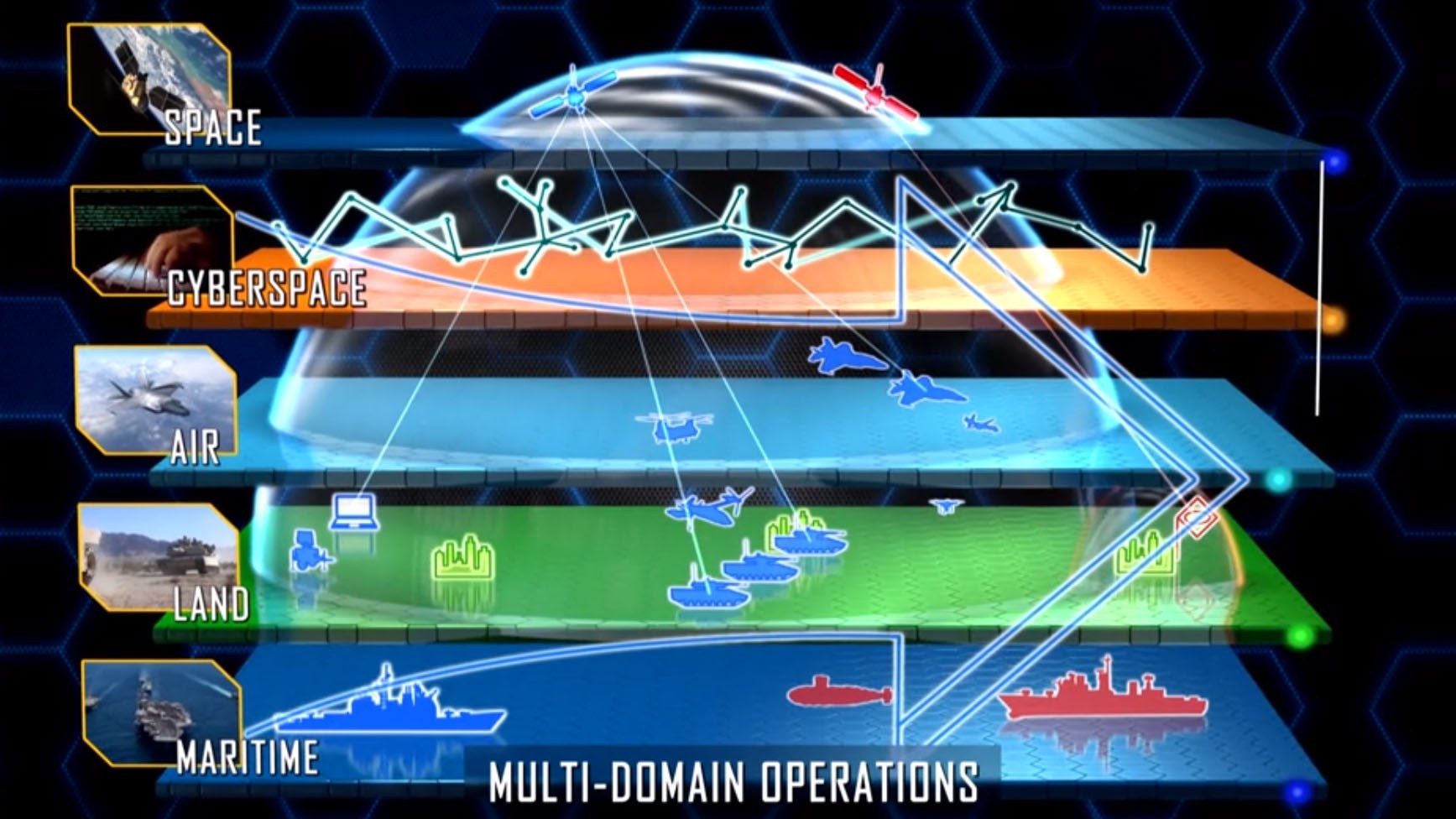
Gen. Jeffrey Harrigian, head of Air Forces Europe, said allies must be included in JADC2 development: "You can't just bring them in in execution and go: 'Hey we built the plan, so, sorry, just do what we told you."

As old-school Sergeant Rock types give way to NCOs with advanced degrees, ARSOUTH Command Sgt. Maj. William Rinehart is helping build up both US and allied cyber forces.
“The Russians are really good at this, better than us,” said the UK’s Maj. Gen. Felix Gedney, who just wrapped up a year as deputy commander of Operation Inherent Resolve. “We saw a very clever, assiduous information campaign aimed at discrediting the campaign of the coalition. And I would argue in many of our nation’s capitals, we didn’t realize we were being played.”

China and Russia are outmaneuvering the US, using aggressive actions that fall short of war, a group of generals and admirals have concluded. To counter them, the US needs new ways to use its military without shooting, concludes a newly released report on the Quantico conclave. The US military will need new legal authorities […]


Consolidate network monitoring, performance management, and fault isolation into a single, comprehensive solution.

"If something kicks off, we're the first ones to see it," the sergeants told us. "We're the first ones to react. And you're on the line, they're coming after you."
"'Battle' is very tactical," said another participant approvingly. "We've got to have a cultural shift." We need to recognize we're in conflict right now with great power adversaries, even if we're not shooting at each other.

Today, Brig. Gen. McIntire told me, Army field artillery and air & missile defense are like two boxers, one who can only punch and the other who can only block. "We’ve got to have one boxer that has the ability to strike and block simultaneously," he said. "That’s the speed that we’re going to need in the future."

Unlike the Taliban, Russia and China can shoot down our drones, jam our transmissions, and hack our computers. So to prepare to fight them, we need a very different communications network — one the US Army is now studying how to build.

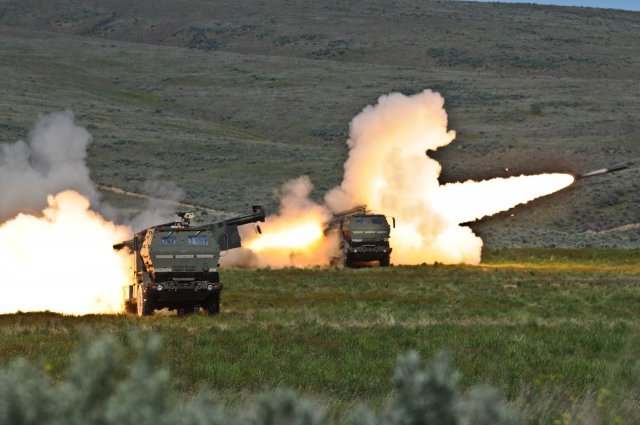
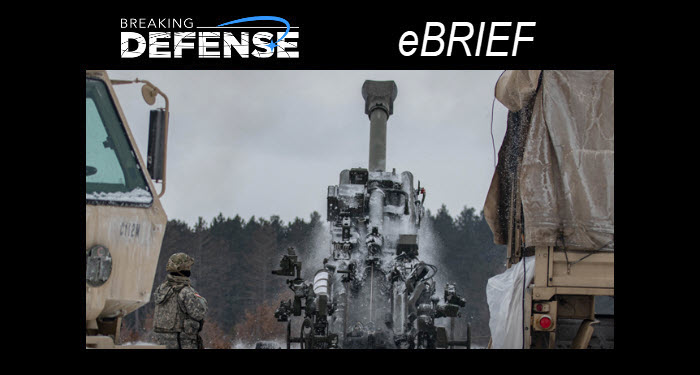
The Army is modernizing three artillery systems: 155 cannon, the cheapest option, for the close fight against the enemy's frontline forces; guided rockets for the deep fight against enemy reinforcements and supply lines; and missiles, the most expensive munitions, for very deep or even strategic strikes against targets in the enemy rear and homeland.

All this technology serves a new concept of operations for defeating dense advanced air defenses of the kind Russia and China are both building for themselves and selling abroad.

WASHINGTON: The Air Force and Army couldn’t start an important set of tabletop wargames last week because of the government shutdown. Air Force Gen. Mike Holmes revealed the information when he disclosed today that the Air Force was starting multi-domain war games to hammer out how the land and air services would work together in […]

As the surface Navy intensively strives to achieve the cross domain capabilities so essential to warfighting success against a near-peer competitor, Raytheon is using its wide spectrum of defense technologies to support those efforts. Modern warfare increasingly requires operations across all of the five domains of land air, surface, subsurface, space and cyberspace. A key […]